
Chronic absenteeism is on the rise since the onset of the COVID-19 pandemic. One national nonprofit, Attendance Works, estimates that the number of chronically absent students, defined as those who miss more than 10% of school days, has doubled to more than 16 million students nationwide over the last couple years. Recent reports from New York, New Jersey, and Baltimore show soaring rates of chronic absenteeism in urban schools.
In partnership with 26 DC public charter schools that utilize our daily-updated data warehouse and dashboard tools, we dug into 2021-22 attendance data through May 24 to identify possible trends and bright spot schools with markedly lower rates of chronic absenteeism to learn from them. This blog post includes a brief discussion of our sample's attendance data and six common themes we heard from teams at two bright spot schools, Friendship Woodridge and Statesmen Academy.
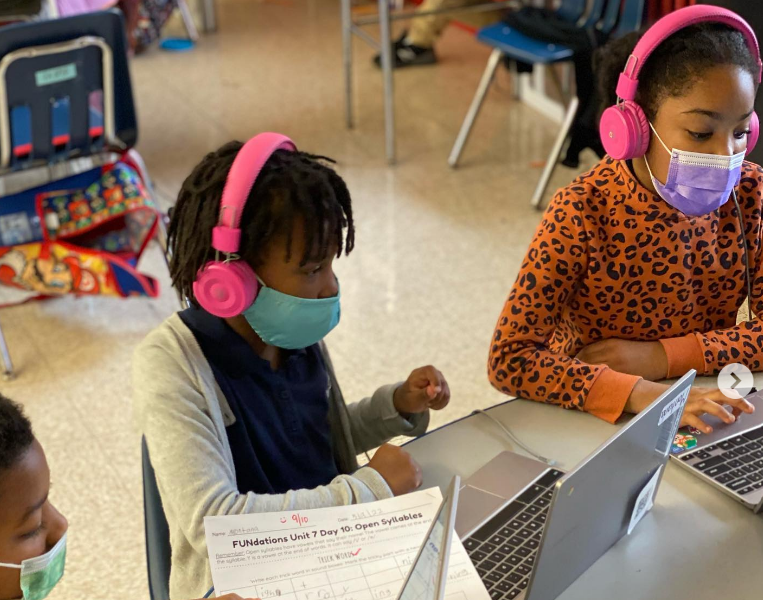

Our sample's attendance data
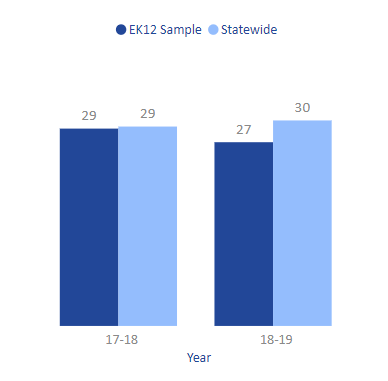
Comparison of chronic absenteeism at sample schools with state in 2018-19
We analyzed attendance data for 8,700 students from 26 schools in 9 LEAs, comparing absenteeism this year to pre-pandemic results from 2017-18 and 2018-19. In those years, about 1 in every 4 students at schools in our sample were chronically absent by the end of the year, which was statistically similar to statewide rates.
This year as of May 24, about 2 in every 5 students and more than 1 in every 2 students designated as at-risk at the 26 participating schools met the chronic absenteeism threshold, a sharp increase from 2018-19.
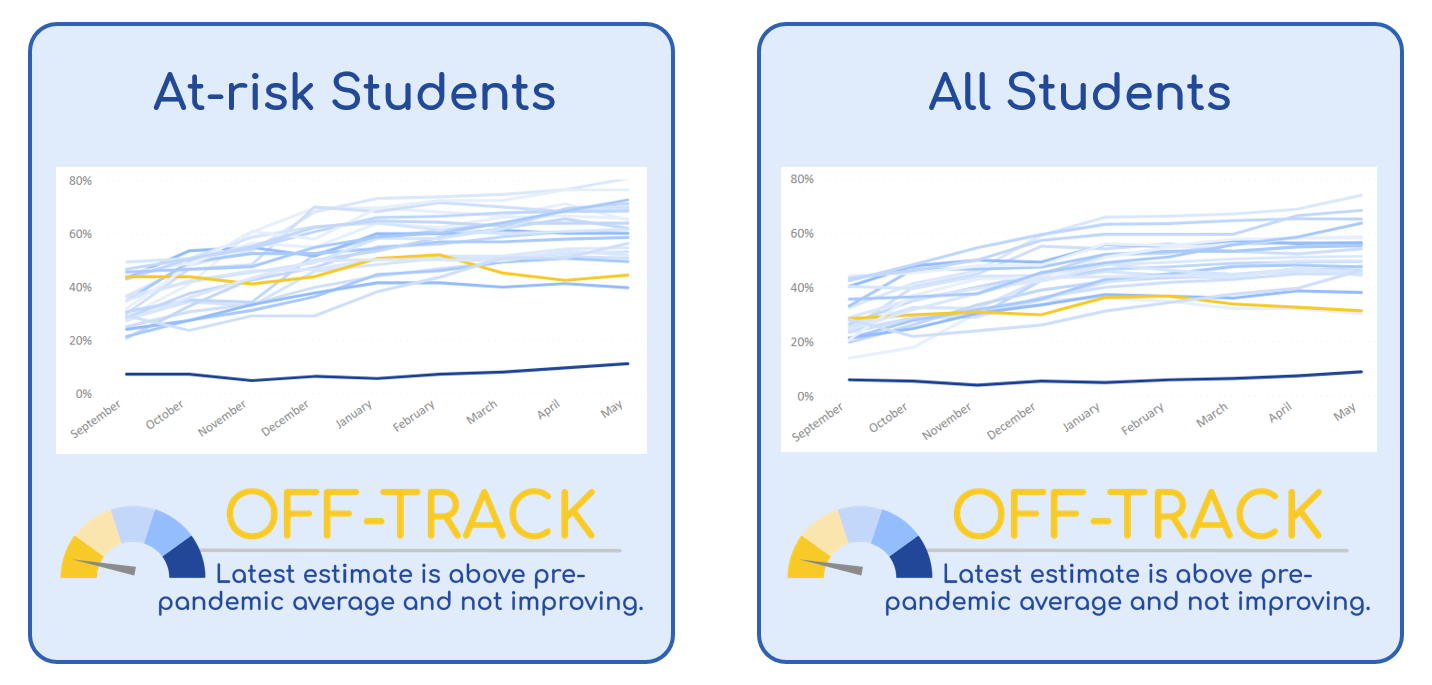
Chronic absenteeism rates as of the end of each month by school and student group.
The yellow and blue lines in the charts above represent the bright spot schools we interviewed, Statesmen for its low chronic absenteeism all year and Friendship Woodridge for lower absenteeism and for being the only school where the number of students considered chronically absent did not continue increasing after the Omicron wave subsided.
COVID-19 variants, mainly the Omicron winter wave, impacted attendance
Attendance rates declined as the Omicron wave peaked this winter, and it appears that students experiencing quarantines were less likely to complete their online requirements for earning attendance credit via distance learning.
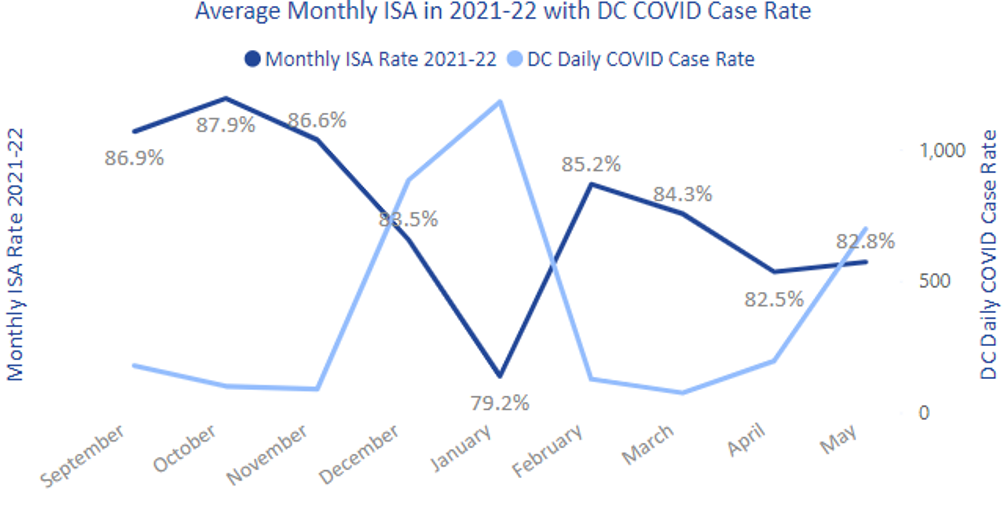
However, after the Omicron wave crested, attendance rates did not return to pre-Omicron levels which were already lower than 2018-19 rates. At 25 of 26 schools in our sample, the number of students considered chronically absent did not subside in March and April.
Increased chronic absenteeism is likely to continue widening gaps in unfinished learning. Local and national research links absenteeism and the amount of missed instructional learning time to lower academic growth and graduation rates, particularly for economically disadvantaged students.
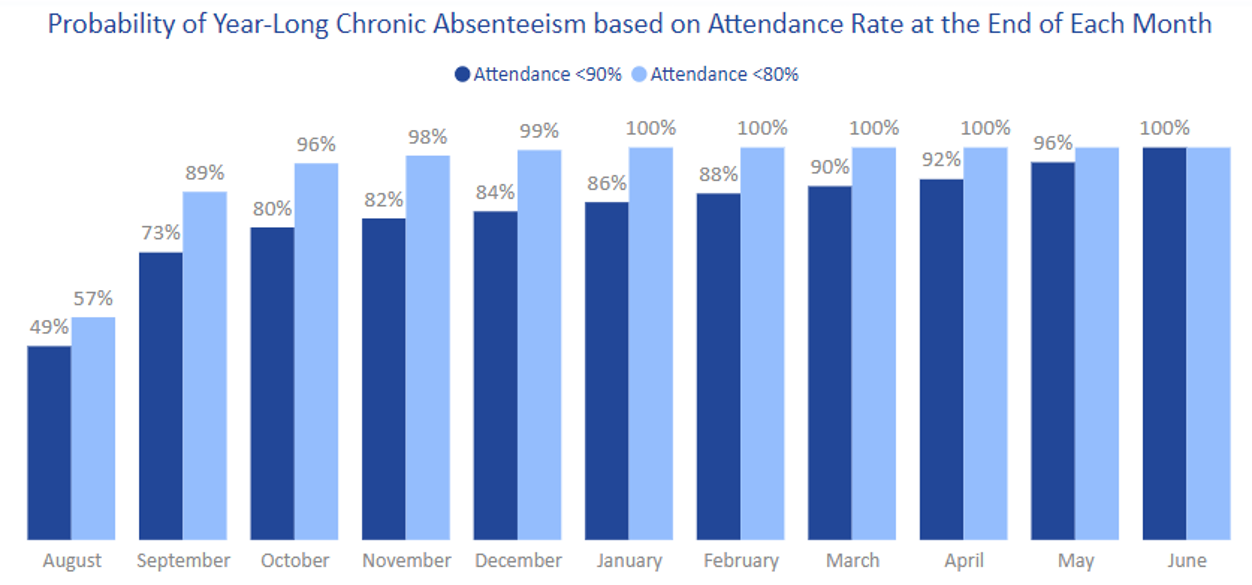
Chronic absenteeism is often evident before the end of the first academic quarter.
Over the past three years, more than half the students who were chronically absent at the end of the year had attendance rates below 90% in September. Students with attendance rates below 80% by September 30 are highly likely to be chronically absent the whole year, and 4 out of every 5 students with attendance less than 90% by October 31 go on to be chronically absent by the end of the year.
Bright spots' strategies
Our bright spot schools, Friendship Woodridge, a PK-8 school in Ward 5, and Statesmen, a middle school in Ward 8, have the lowest overall chronic absenteeism among the network of 26 participating schools both this year and before the pandemic, and the lowest absenteeism for students designated as at-risk. Here are six common themes we heard from these two bright spot schools when we and other participating schools grilled them on what works:
- Student belonging and family relationships. The leaders believe that kids come to school when they and their parents know with complete confidence they are wanted at school. The ability to communicate that desire effectively requires strong student and family relationships that often demand significant and authentic investment.
- Fun and welcoming. We heard that ensuring students and families know school is a fun, interesting, caring, and safe place seems to be as nearly important as the quality of instruction that happens during school hours.
- Frequent attendance data meetings. Woodridge and Statesmen teams meet weekly to biweekly to review qualitative and quantitative attendance data, including hard numbers at the school and student level as well as qualitative summaries about which interventions work, for whom, and why.
- Adult resiliency and creativity. We heard leaders say things like "continue trying new things until you find one that works for every student" and also "don't get bored with what works." Both schools' attendance teams stressed that attendance improvement requires upfront investment (time and money) at the beginning of the year and adult resilience to reach each student. They realize not every strategy will work for all students, but you get the sense their teams will keep trying every creative solution they generate until they find individual success with every student, including and especially the "difficult" scholars who get on your nerves.
- Addressing student anxiety. Both schools mentioned student anxiety about coming to school, and that "therapeutic approaches" to parent engagement and student relationships are an important strategy.
- Adult attendance leads by example. One last common theme was that the teams stressed the importance of adult attendance. Students, especially middle schoolers, take note of when their teachers are out of school and why. Statesmen offers to pay out unused leave to school staff as one way to incentivize adult attendance. Leaders also mentioned the strategies above related to belonging, fun, and therapeutic approaches apply to adult staff as well.
The bright spot school teams invest significant amounts of staff time and discretionary funds on attendance-related activities. We asked the leaders to estimate those costs and include which activities they considered "attendance-related."
They estimate spending an average of $500-$1,250 per student on strategies they believe have improved attendance over time like: therapeutic training for staff working with families, extra uniforms and uniform cleaning services, home visits, clinical therapist-led parent workshops, student attendance incentives, staff attendance incentives, Uber/Lyft rides, etc.
A school leader added that one student who they successfully moved from chronic absentee to regular attendee required nearly $5,000 in support to get there.

Additional ideas bright spots said work for them
- Ask students what incentives they want for outstanding attendance and maintain an Amazon account to purchase them. Students have wanted things like play with a bunch of beach balls and be showered by a confetti cannon. One school also budgets for extra field trips specifically for good attendance.
- Shift the conversation with students and families from "why you aren't coming" to "what support do you need and what are the barriers?"
- Work with clinical therapists and organizations like Georgetown Center for Wellbeing in School Environments or GW Center for Health and Health Care in Schools to provide training to staff on taking therapeutic approaches to attendance conversations with students and families.
- When chatting with parents of new students, drop in the conversation something like, "We want him/her to have perfect attendance. We know that can be challenging, but I guarantee she/he will feel so good about it."
- Keep running records of what attendance interventions and incentives are utilized for each student, including those under constant monitoring and those who come every day, and analyze that data weekly.
- Be active across social media to reach more families and show how school is a fun and interesting place for students.
- Create a "red carpet" arrival treatment for scholars every day with a student DJ-ing a dance party and announcing the arrival of students by name as they walk in.
- At the end of holiday weeks and weekends, go on a "hard core chase for chronically absent students" with text messages to parents.
- Avoid anything perceived as punitive when it comes to attendance and refrain from badgering students about what they don't have when they arrive, uniforms, for example. If a student does not arrive with their uniform on, provide them with a clean one or allow the student to wear any school shirt because it's still a school shirt and acceptable, figuring out a strategy with the student to have the right uniform next time.
- Offer babysitting services for younger children who have been left with a middle or high school scholar to watch at home instead of attending school.
- Provide Uber/Lyft rides for students who are late but be wary of overuse and reliance on this expensive strategy.
- Go on a "hunker down" during the school day, visiting each known address associated with a student to find them and let them know how much they are missed at school.
Attendance-Related resources
Therapeutic Approach and Family/Student Relationships
- GW Center for Health and Health Care in Schools
- Turnaround for Children: The Science of Development Relationships toolbox
- Georgetown Center for Wellbeing in School Environments
Attendance Research and Resources
- Attendance Works: Toolkits and Attendance Improvement Resources
- Annenberg EdResearch for Recovery: Reducing Chronic Absenteeism brief
- National Student Attendance, Engagement, and Success Center: Research and Webinars on Addressing Attendance
- DC's Every Day Counts! Taskforce