In short
- 21 schools earn the Bold Performance designation in 2026. Together they serve 6,900 elementary and middle school students, 10% of DC students in grades PK-8.
- 62% of their students meet the career-ready benchmark on the DC CAPE in reading and math combined, against 45% at the 112 other schools that qualify for Bold consideration.
- Economically disadvantaged students at Bold Schools reach 57%, a higher rate than all students at other Bold-eligible schools.
- Bold Schools improved at more than double the rate of their peers since 2022: up 21 points for all students and 24 for economically disadvantaged students, against 9 and 10 points elsewhere.
- Ten years of interviews point to ten practices that Bold Schools share, from high expectations to going the extra mile.
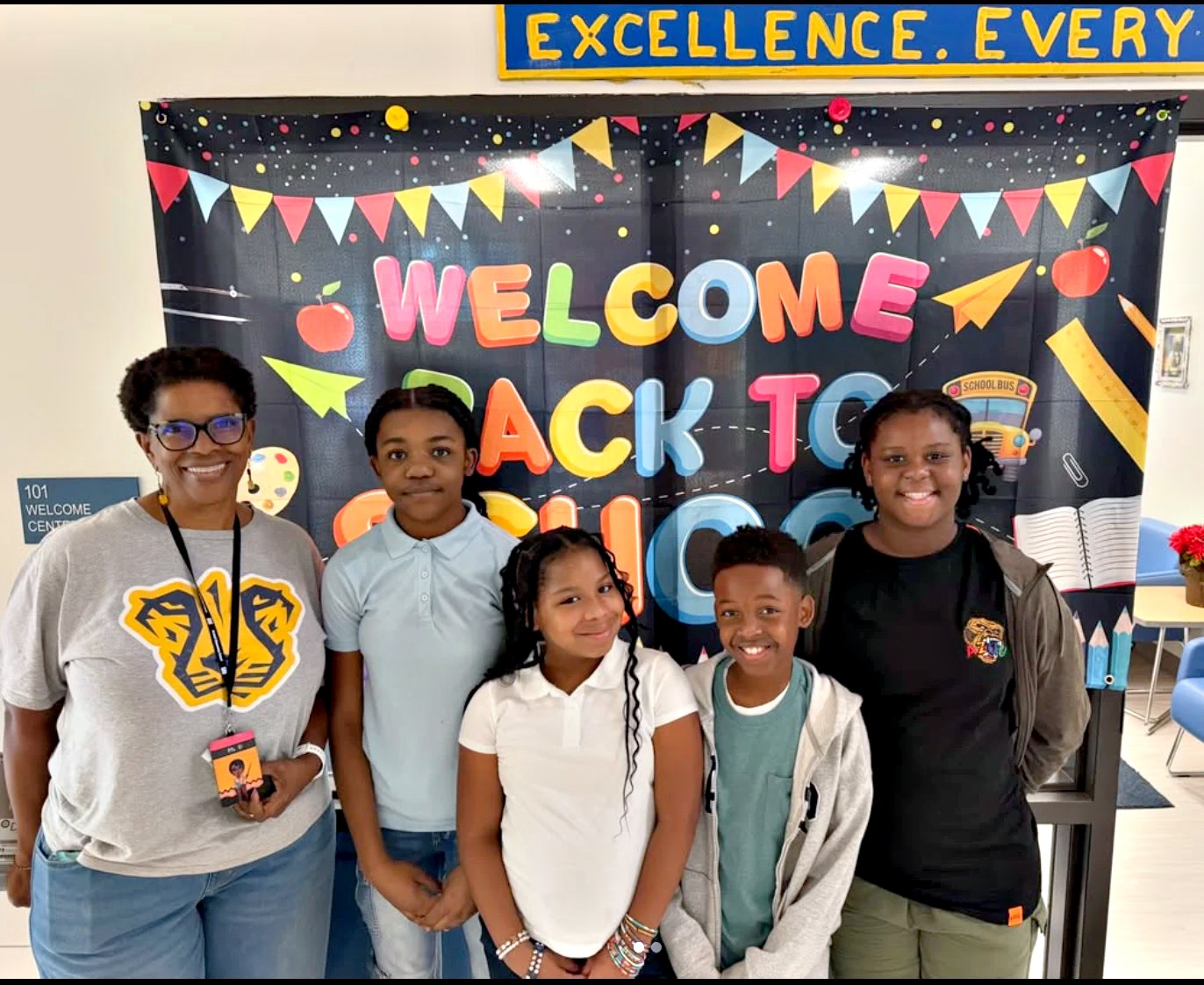
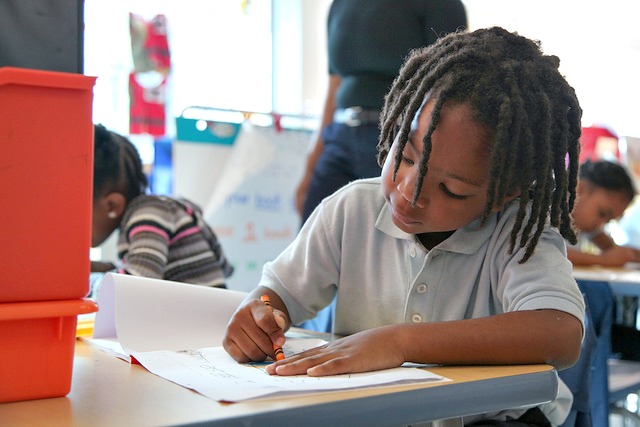
Ten years of Bold Schools
The ten practices of Bold Schools
Every Bold School is its own place. But ten years of interviews with the instructional leadership teams of DC's Bold Performance Schools show the same ten practices again and again. They are the report's biggest takeaway, and the playbook for growing the number of Bold Schools.
Set high expectations.
Bold Schools commit to high academic expectations for every student.
At Barnard ES, each student knows what they are working toward, even kindergarteners.
Build strong relationships.
Bold Schools cultivate intentional relationships among students, educators and families.
Tubman ES conducts home visits to strengthen relationships with students and families.
Focus on joy and belonging.
Bold Schools create a fun and joyful school environment for students and adults.
DC Prep organizes an AttenDANCE to celebrate attendance.
Use data for continuous improvement.
Bold Schools use data to find areas for growth, celebrate successes and put strategies in place that improve student outcomes.
Friendship Blow Pierce MS holds weekly data meetings with every teaching team and shares the data with students.
Implement targeted student intervention.
Bold Schools give students extra time with rigorous, grade-level content, using data to group them and close specific gaps.
DC Prep Edgewood MS sets aside a daily What I Need block that groups students by skill gap.
Use assessments to inform instruction.
Bold Schools use student work, exit tickets, short assessments and interim benchmarks to adjust instruction.
At Friendship Chamberlain ES, every lesson ends with a data point, usually an exit ticket.
Provide instructional support to teachers.
Bold Schools make sure teachers understand the content, have tools for student misconceptions, and make the most of every minute.
KIPP DC Promise keeps an unwavering culture of observation and feedback.
Prioritize routines.
Bold Schools create a stable, predictable environment where students know exactly what to expect each day.
At Garfield ES, each day begins with a 15-minute Strong Start.
Go the extra mile.
Bold Schools do what it takes, whether that means jumping in on the small stuff or going above and beyond.
Stanton ES added a laundry room and a uniform swap after spotting a uniform barrier, plus Saturday school.
Support the broader education community.
Bold Schools open their doors and share successes and challenges with other schools.
How each practice looks inside the schools, with more examples: the report, from page 17 (PDF).
Data is used as fuel instead of a gotcha moment. We use data as a way of life and that is how we drive outcomes.
What makes a school Bold
In DC and across the country, the more students from priority populations a school serves, the lower its proficiency rates tend to be. The correlation is strong enough that a school's demographics predict its results within a couple of percentage points. Bold Performance Schools break that pattern.
To be a Bold School, a school serves at least 30% students from economically disadvantaged households and posts proficiency rates well above what schools serving similar students achieve, as measured on the 2026 DC CAPE. EmpowerK12 projects each school's expected proficiency from its demographics, then measures the gap. That gap is the school's Percent Proficient Above Expected (PPAE). A Bold School's PPAE is at least 10 points in math and reading combined, more than the model's own margin of error.
The method, the model covariates and their fit are in the report's appendix (PDF, page 36).
The 21 schools of 2026
Six schools are named for the first time. Whittier ES posts the highest PPAE in the city. Every school, with its photo and story, is on dcboldschools.org.
| School | Sector | PPAE | Econ. disadvantaged | Prior designations |
|---|---|---|---|---|
| Barnard ES | DCPS | 15.8 | 39% | 1 (2025) |
| Center City - Congress Heights | Public charter | 15.3 | 43% | 5 (2025, 2024, 2023, 2022, 2019) |
| DC Prep - Edgewood MS | Public charter | 12.7 | 56% | 5 (2024, 2019, 2018, 2017, 2016) |
| Friendship - Blow Pierce MS | Public charter | 14.5 | 73% | 5 (2025, 2024, 2023, 2019, 2018) |
| Friendship - Chamberlain ES | Public charter | 16.8 | 68% | 2 (2025, 2017) |
| Friendship - Ideal ES | Public charter | 10.9 | 81% | First year |
| Friendship - Ideal MS | Public charter | 14.5 | 68% | 3 (2025, 2024, 2023) |
| Garfield ES | DCPS | 12.5 | 85% | 1 (2017) |
| Garrison ES | DCPS | 11.4 | 32% | 4 (2025, 2023, 2022, 2019) |
| Global Citizens | Public charter | 19.3 | 41% | First year |
| JO Wilson ES | DCPS | 10.1 | 53% | First year |
| Kimball ES | DCPS | 13.7 | 83% | First year |
| KIPP DC - Promise | Public charter | 11.1 | 69% | 4 (2019, 2018, 2017, 2016) |
| LaSalle-Backus EC | DCPS | 12.6 | 60% | First year |
| Leckie EC | DCPS | 10.5 | 70% | First year |
| Noyes ES | DCPS | 16.3 | 73% | 1 (2025) |
| Savoy ES | DCPS | 10.7 | 84% | First year |
| Stanton ES | DCPS | 14.8 | 83% | First year |
| Tubman ES | DCPS | 11.0 | 58% | First year |
| Washington Global | Public charter | 14.1 | 59% | 2 (2025, 2022) |
| Whittier ES | DCPS | 37.2 | 36% | 4 (2025, 2024, 2023, 2019) |
PPAE = Percent Proficient Above Expected, math and reading combined, 2026 DC CAPE. Prior designations count Bold Performance years since 2016.
Two systems behind 15 of the 21
Eleven of this year's Bold Schools are DC Public Schools elementary schools, and four are Friendship Public Charter Schools campuses. The report spends four pages on what the two systems did, because improvement at that scale is a system story as much as a school story.
At Friendship, 72.2% of economically disadvantaged middle school students met the career-ready benchmark in reading in 2025-26 and 46.8% in math, against 47.9% and 32.0% statewide. Reading proficiency rose every year since 2021-22, a gain of 23.3 points over four years. Read the Friendship spotlight (PDF, page 26).

DC students make progress for a fourth straight year
Bold Schools lead a city moving in the right direction. The 2026 state assessment shows gains for the fourth consecutive year, in both subjects and across every student group. Six in ten students meet the career-ready benchmark in reading, up from 52% in 2022, and 51% meet it in math, up from 41%. In math, 1,500 fewer students scored at Level 1 than last year, the largest single-year drop in the number of students furthest behind in the PARCC and CAPE era.
School poverty now predicts school performance less than in any year of DC state test history. In 2022 the share of economically disadvantaged students a school served explained nearly three quarters of the variation in school proficiency. That figure now sits at 53%. The DC CAPE dashboard has every school and student group.
DC will be the first urban city to close performance gaps this decade. Our students will exceed the NAEP national average in reading and math in the next five years.
What the report recommends
Bring structured literacy's playbook to early numeracy.
The District trained thousands of educators in the science of reading, and reading recovery followed. Math needs the same coherent approach, from instructional superintendents to principals to teachers.
Scale evidence-based math instruction through the Capital Math Collective.
After year one of the two-year grant, grantee schools outgained non-grantees in math proficiency, 3.6 points to 1.2. DC should make that support available to every DCPS and public charter school.
Keep the investments that fuel the recovery.
Equitable funding, high-impact tutoring, high-quality instructional materials and data-driven continuous improvement.
Related research from EmpowerK12
Report · October 2025DC's 2025 Bold Performing Schools16 DC schools recognized as Bold Performance Schools, with proficiency rates about 19.5 points above schools serving similar students, and the educators leading them.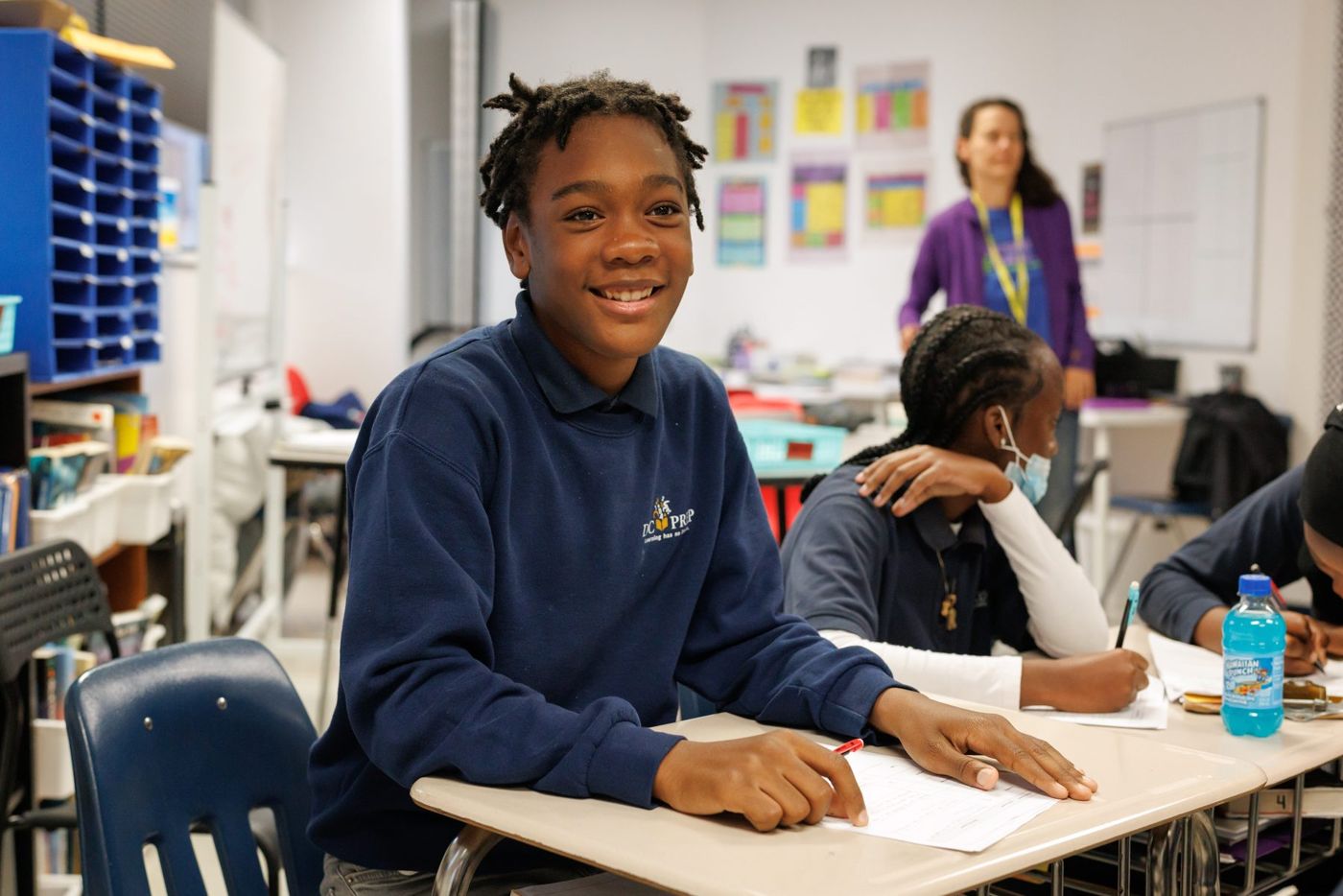 Report · March 20242024 DC Math Bright Spots ReportProblem-solving math strategies from instructional leaders and educators at DC public schools showing real math growth. Part of the DC Math Hub.
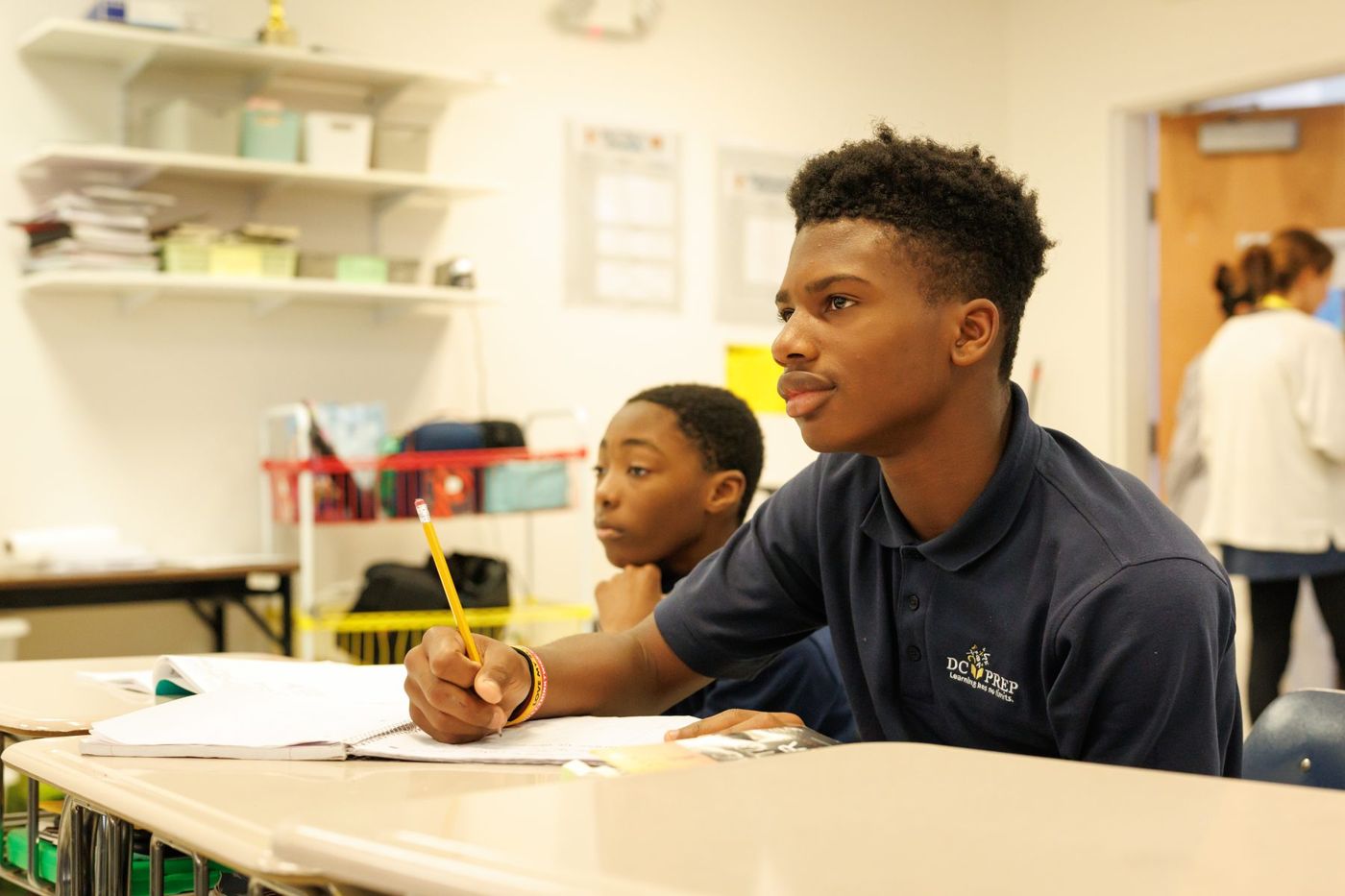 Evaluation · October 2025CitySchools Collaborative supports for tutoring providers and student outcomesA quasi-experimental look at high-impact tutoring in DC during 2024-25: math and reading growth, plus what students, caregivers and tutor providers said.
Sources this report draws on
- Education Recovery Scorecard, Harvard and Stanford: DC the most improved state since the pandemic
- The Nation's Report Card (NAEP), DC's Black and Hispanic students 19 points from the national average in 2024, down from 33 in 2003
- OSSE, 2026 DC CAPE results by school and student group
- Why the amount of instructional time matters, EmpowerK12